

Velociraptors
Velociraptors are among the oldest artificial creatures still roaming Mereldia. They were created tens of thousands of years ago during the ancient War of Magic, when spellcasters unearthed the fossilized remains of long-extinct predators and used magic now lost to time (manifestations) to restore them to living flesh. In doing so, they did not merely revive what once was, but reshaped it into something larger and more formidable than its ancient form.
Though their origin lies in magic, velociraptors themselves are not magical beings. They are considered witless creatures and therefore classified as animals. However, they are unsettlingly close to the threshold of sentience. Though they possess no true reason, morality, or higher thought, their problem-solving, coordination, and hunting strategies are advanced enough to make even seasoned travellers wary. Over the millennia since their creation and the fall of their makers, they have established themselves as apex pack hunters.
Across Mereldia, velociraptors have adapted to the regions they inhabit. Variants dwell in plains, forests, coasts, deserts, mountains, and tundra, each shaped by climate and terrain in build, colouring, and behaviour. Despite these regional differences, all share defining traits:
-
feathered bodies built for speed and balance
-
sickle-clawed hind talons
-
keen senses
-
a deeply ingrained pack structure
They hunt cooperatively, communicate through calls and body language, and rely on coordination rather than brute force alone.
Variants
-
Plain
-
Doe Raptor
-
-
Forest
-
Ghost Raptor
-
Dwarf Raptor
-
-
Coastal
-
Western variant
-
Eastern variant
-
-
Swamplands
-
Desert
-
deep-desert
-
border areas
-
-
Mountain
-
Northern variant
-
Southern variant
-
-
Snow
All velociraptor art, as well as development collaboration, was done by 132364. Thank you so much!
Plain Raptor
The most common and widespread raptor variant. Roughly the size of an average wolf, plain raptors inhabit grasslands, meadows, and lightly forested regions. Their range extends from northern Caelmere to the southern reaches of the North Lands. Although they have largely disappeared from settled areas, they remain abundant throughout the wildlands, making travel through those areas considerably more dangerous.
Plain raptors are highly social pack hunters that rely on speed, endurance, and coordinated attacks to overwhelm prey. Their diet consists primarily of deer, antelope, and other medium-sized grazing animals, though a determined pack is capable of bringing down prey as large as a horse.
While they generally avoid people, attacks are not unheard of. Most occur during harsh winters, prolonged droughts, or other periods of food scarcity, when desperate packs become less selective in their choice of prey.
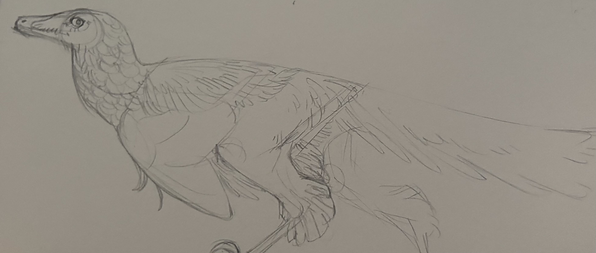
Doe Raptor
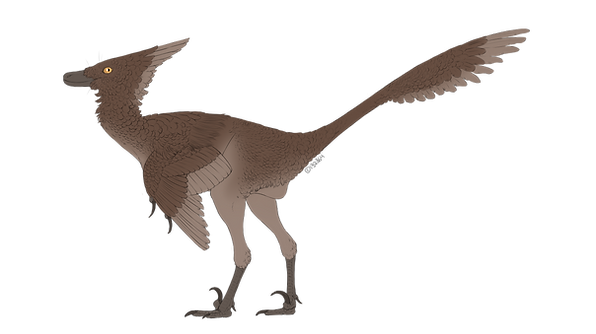
A colour variant of the plain raptor most commonly found in lightly forested regions and woodland edges. Its brown plumage and pale underside closely resemble the coat of a deer, allowing it to blend seamlessly into the same habitats. A smaller regional variety native to Eriwon even bears white spots across its back, giving it the appearance of a young fawn in both size and colouration.
While sharing the same hunting behaviour as other plain raptors, the deer raptor benefits from its unusual appearance. At a distance, it is easily mistaken for the very animals it preys upon, making it less likely to draw attention before closing the distance. This resemblance is particularly effective in mixed woodland, where glimpses of brown through the undergrowth are commonly dismissed as grazing deer.
Forest Raptor
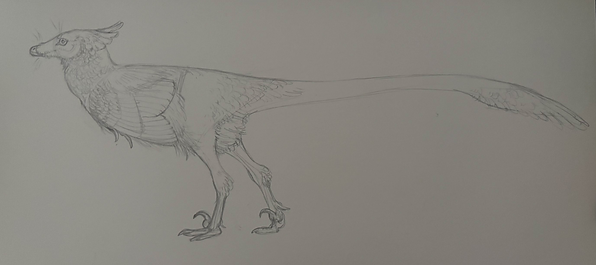
The smallest and least dangerous of the raptor variants. Forest raptors inhabit woodlands, where they have adapted to life both on the forest floor and in the canopy. Unlike all other raptor variants, they possess limited powered flight, allowing them to quickly reach higher branches to escape predators. Their long, curved claws are likewise specialised for climbing, enabling them to scale trees with remarkable speed and move confidently among the branches.
Their diet consists primarily of rodents and small birds. As a result, they pose little threat to larger animals or people and will almost always flee rather than attack when confronted.
Forest raptors exhibit the greatest natural diversity of any raptor variant, with numerous regional forms differing in size, plumage, and preferred habitat. The smallest are no larger than a crow, while the largest rival a heron in size.
Nesting behaviour varies with size. Smaller forms typically build nests high in trees, protecting both the brooding mother and her young from ground predators. Larger forms, however, construct ground nests much like the other raptor variants.
Owing to their small size and relatively docile nature, forest raptors have become popular in the illegal exotic pet trade. Centuries of selective breeding have produced countless captive breeds displaying unusual feather patterns, colours, and body shapes, many of which are not found in the wild. Despite this, forest raptors are not considered domesticated. They remain highly social pack animals and generally fare poorly in captivity, particularly when kept in isolation.
Ghost Raptor
Native to the north-eastern forests of Eriwon, the ghost raptor is one of the most elusive forest raptor breeds. It is distinguished by its remarkable vocal abilities, having evolved mimicry capable of reproducing sounds with near-perfect accuracy. Like the lyrebird it is distantly related to, it uses these vocal displays to attract mates, imitating the calls of other animals and virtually any sound it hears in its surroundings.
If it has previously overheard speech, a ghost raptor may even reproduce words and short phrases with startling accuracy. This often causes travellers to mistake its calls for someone calling for help deep within the forest. As the naturally timid raptor retreats from any approaching animal, it continues its courtship display from farther away, unintentionally leading those who follow it deeper into the woods.
Although entirely harmless itself, this behavior has earned the ghost raptor its name. Numerous travellers have become lost or suffered fatal accidents after pursuing its calls, particularly in the treacherous forests of the Veil Mountains with their hidden cliffs.
Dwarf Raptors
A specialised branch of pet forest raptors bred for miniature size. Most dwarf raptors are no larger than a dove and are commonly cross-bred with small songbirds such as robins, tits and wrens. These pairings bring forth many of the birds' physical traits, allowing breeders to produce an ever-growing variety of plumage patterns, colourations and body shapes.
Thanks to the remarkable genetic diversity of forest raptors, dormant traits can easily be expressed through selective breeding. Combined with repeated cross-breeding between different raptor lines, this has resulted in hundreds of captive breeds, many of which bear little resemblance to their wild ancestors.
While prized as exotic pets, dwarf raptors are generally unsuited to captivity and entirely incapable of surviving in the wild. Generations of intensive selective breeding have also led to widespread hereditary disorders, deformities and weakened constitutions. Despite their popularity, they remain undomesticated pack animals and often suffer from stress and behavioural problems when kept alone.
The breeding of dwarf raptors is fully prohibited in the North Lands and restricted in most kingdoms, but remains legal in Eriwon, Koruna, Caelmere and the Coastal Region.
Coastal Raptor
The coastal raptor is a specialised raptor variant adapted to life along shorelines, estuaries and coastal wetlands. Unlike many other raptor variants, they are closely associated with marine environments, relying primarily on fish and other coastal animals as their food source. Their elongated legs, narrow snouts and specialised hunting techniques allow them to move through shallow waters and capture aquatic prey with precision.
Coastal raptors are highly social during breeding season, forming colonies where multiple bonded pairs nest together for protection and safety in numbers. Despite living in colonies, they do not hunt as a group by default. Instead, most individuals forage alone or alongside their lifelong mate, only gathering in larger groups when defending their territory or exploiting an abundant food source.
Both variants maintain strong pair bonds, with mates remaining together throughout their lives. However, their behaviour differs greatly depending on their environment. Western coastal raptors developed into smaller, more specialised fish hunters, while eastern coastal raptors retained more of the cooperative hunting instincts of their ancestors and became larger, more opportunistic predators.
Western Variant
The smaller of the two coastal raptor variants. The western coastal raptors are found along the warmer western shores of Koruna, as well as the rest of the Coastal Pond. They are comparable in size to herons and are among the least threatening raptor variants, rarely showing aggression unless defending their nests.
Their diet consists primarily of fish, shellfish and other small coastal animals. They are patient hunters, often standing motionless in shallow water before striking their prey with a quick movement of their elongated snout. Their smaller size allows them to thrive in environments where larger predators would struggle, and they rarely need to compete over food.
Western coastal raptors form lifelong pair bonds and commonly nest in large colonies along cliffs, beaches and sheltered coastal areas. While each pair raises its own offspring and searches for food independently, living in groups provides protection against predators and allows young raptors to be raised safely.
Due to their calm temperament and harmless nature, western coastal raptors are often considered one of the more approachable raptor variants. Their presence along the coast is generally viewed as a sign of a healthy shoreline ecosystem rather than a threat.
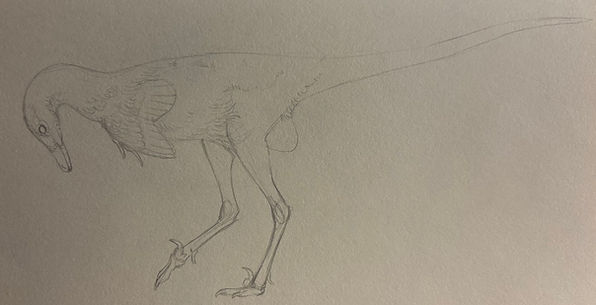
Eastern Variant
The larger and more dangerous of the two coastal raptor variants. Eastern coastal raptors inhabit the colder southern shorelines of Mereldia. Comparable in size to desert raptors, they are adapted to harsher coastal environments where food availability can vary greatly throughout the year.
Although they are capable fish hunters, eastern coastal raptors are highly opportunistic and consume almost any available source of food. Fish make up the majority of their diet, but they also hunt larger coastal animals when opportunities arise and frequently feed on carcasses washed ashore.
Unlike their western relatives, eastern coastal raptors retain stronger cooperative hunting instincts. Individuals usually forage alone or with their mate, but multiple pairs will readily gather into temporary hunting groups when faced with larger prey or an abundant food source. Large carcasses, particularly those of whales and other marine animals, can attract enormous gatherings of eastern coastal raptors from across the surrounding coastline.
Despite their intimidating size and reputation, eastern coastal raptors are not naturally aggressive towards travellers. Most conflicts occur when they perceive a threat to their nests or when people approach feeding sites, where large numbers of raptors can become highly territorial.
Swamplands Raptor
Also known as: Bog Raptor, Kelpie Raptor
The least known and also least common variation of raptor, only occuring in the foggy southern swamps of Eriwon. It is believed to have originated from a population of ghost raptors that migrated south into the swamps, gradually adapting to the bog environment over the millennia. This variant is best known for its eerie, people-like calls. Much like the ghost raptor, the bog raptor can mimic sounds with near-perfect accuracy, including speech.
Rather than using them as a courting display, however, the bog raptor uses these calls in combination with the dense fog common to its habitat to lure in prey. Whether hunting an animal or a person, it mimics the calls of nearby prey, enticing them deeper into the marsh. Once the victim has ventured far enough into the bog to make escape difficult—or once the pack has silently surrounded it—the raptors attack.
Once prey has been successfully lured into an ambush, bog raptors kill their target in 80-95% of attacks. Across all hunting attempts, however, their overall success rate is estimated at 33-55%, making the bog raptor the most dangerous and effective of all known raptor variants. Its deceptive hunting strategy, luring prey with seemingly harmless calls before striking from the fog, has earned it the nickname "kelpie raptor" due to its resemblance to the predatory fae of the same name.
Desert Raptor
One of the most dangerous raptor variants, desert raptors are specialised for survival in the harsh conditions of the Korunan desert. Similar in size to plain raptors, they rely not on individual strength but on the coordination of their packs to overcome prey much larger than themselves.
Desert raptors are highly social predators that hunt in organised groups, using endurance and cooperation to pursue and exhaust their targets across the open desert. Their ability to travel long distances in extreme heat and maintain coordinated attacks makes them a significant threat to both wildlife and travellers crossing the region.
Due to their intelligence, coordinated hunting behaviour and extreme adaptability, desert raptors are considered the greatest threat to travellers in Koruna. Unlike many raptor variants, they are highly opportunistic hunters and will readily test unfamiliar prey if the opportunity arises. Lone travellers are particularly at risk, as desert raptor packs are known to pursue and kill isolated individuals with alarming frequency. Caravans crossing the desert usually hire mages or trained fighters to protect against potential attacks, as even skilled combatants can suffer severe injuries when confronted by a determined pack.
Desert raptors are divided into two major variants: the deep-desert variant, adapted to the extreme heat of the central dunes, and the borderlands variant, which inhabits the transitional regions between the desert and greener lands.
Deep-Desert Variant
The deep-desert variant is the most specialised desert raptor, inhabiting the hottest and driest regions of the Korunan desert. Their unusual feathering gives them a distinctive appearance, with long, loose feathers resembling those of an ostrich. Unlike other raptor variants, their bodies lack dense down feathers, allowing heat to escape more efficiently and preventing overheating during long periods of activity.
Their reduced feather insulation and specialised plumage allow them to survive in areas where temperatures would be dangerous for most other raptors. They are capable of travelling great distances across open dunes in search of prey, often following seasonal movements of desert animals.
Because of the limited cover available in the deep desert, these raptors rely heavily on endurance and pack coordination rather than ambush. Once a target is selected, the pack will pursue it over long distances, exhausting the prey before closing in for the kill.
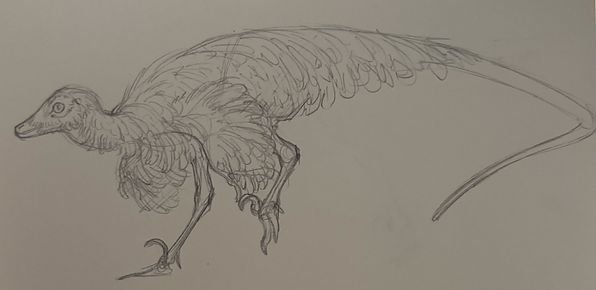
Borderlands Variant
While the deep-desert variant is specialised for the most extreme desert conditions, the borderlands variant is better suited to the more varied environments along the desert's edges. Unlike their deep-desert relatives, they possess more typical raptor feathering, with patterns and colours that provide camouflage among rocky terrain, dry grasslands and scattered vegetation.
They are particularly notable for their sexual dimorphism. Females generally possess more muted colours, while males have brightly coloured head and tail feathers. These feathers vary by region and are influenced by female preference over generations, resulting in a wide range of colours. The most common shades are blue and green, ranging from deep azure tones approaching purple to pale yellow-green hues.
Red-orange feathering was once common among some populations, but these individuals were heavily hunted due to the cultural value placed on red and gold colours in Koruna. Their feathers were highly sought after for ceremonial garments and high fashion, causing red-feathered desert raptors to become extremely rare. Today, remaining populations are protected, and any collection of feathers is carried out through difficult no-kill methods that allow the birds to naturally shed them.
While less specialised for extreme heat than the deep-desert variant, borderlands desert raptors are highly adaptable and often encounter more varied prey. Their proximity to travelled routes also makes them responsible for many encounters with caravans, particularly near the edges of settled regions.

Male
Female
Mountain Raptor
The second-largest raptor variant and one of the most feared predators in mountainous regions. Mountain raptors are highly adapted to harsh, elevated environments, where they use their powerful builds, keen eyesight and exceptional climbing ability to navigate steep terrain. Their territories often overlap with major mountain passes, making them a significant threat to travellers who leave established routes.
Unlike plain raptors, which rely primarily on pack pursuit, mountain raptors are specialised ambush hunters. They use the natural terrain to their advantage, remaining hidden among rocks and cliffs before striking their prey from above. While they primarily hunt mountain wildlife, their size and hunting behaviour have made them the raptor variant most frequently associated with fatal encounters.
Mountain raptors are divided into two distinct regional variants: the northern mountain raptor, which inhabits the mountain ranges of northern Mereldia, and the southern mountain raptor, which evolved independently within the Veil mountain range. Despite their differences in size and appearance, both variants share the same adaptations that make them among the most dangerous predators found in mountainous regions.
Northern Variant
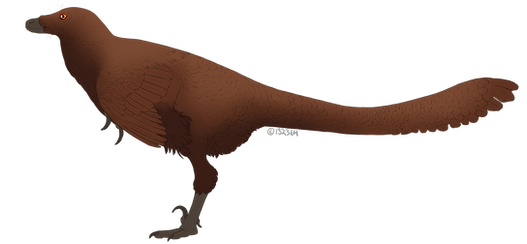
These raptors are most commonly found in the northern parts of Mereldia and its many mountain ranges. Depending on elevation and environment, their size and colouration can vary greatly. At their largest, they are the second-largest raptor variant in Mereldia and are also the ones most commonly cited in lethal attacks.
Northern mountain raptors are perfectly adapted to life in cold, mountainous terrain. Their large bodies help them withstand freezing temperatures, while their powerful legs and claws allow them to traverse steep cliffs, narrow ledges and unstable rocky ground with ease. They typically establish large territories, often spanning several valleys, and are capable of travelling great distances in search of prey.
Their hunting style relies on patience and concealment. They use the natural formations of the mountains to remain hidden from their prey, often waiting among cliffs or rocky outcrops before striking with sudden speed. Their size allows them to hunt a wide range of mountain animals, and particularly large individuals are capable of taking down very large prey.
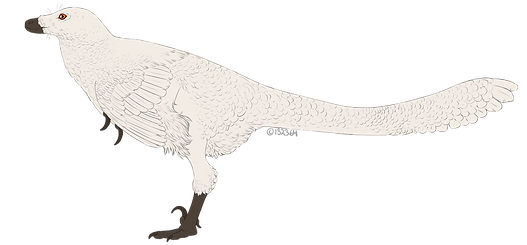
They are the only raptor variant known to change their feathering according to the season. In summer, most appear in brown to grey tones, blending into the exposed rock and vegetation of the mountains. During winter, they develop fully white feathering to better camouflage themselves in snowy landscapes. Due to this seasonal change, northern mountain raptors are often confused for snow raptors during winter, leading to the widespread misconception that snow raptors take over mountain raptor territories in colder months.
Summer Appearance
Winter Appearance
Southern Variant
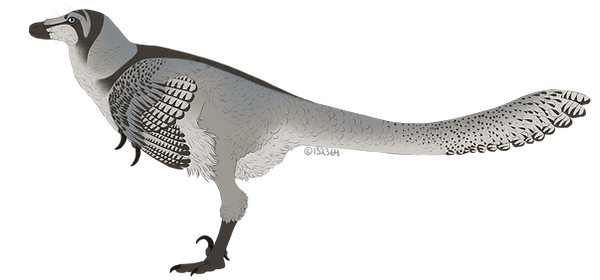
These raptors are exclusive to the Veil mountain range. While smaller than their northern cousins, they are considered at least equally dangerous. Due to their habitat overlapping with that of the Borderland Desert Raptors on the Korunan side of the Veil, they remain at higher elevations in the south, where competition is greater. Near Eriwon and throughout the northern side of the Veil, however, they are more willing to descend further down the mountains, often causing problems for farmers by preying on livestock.
Southern mountain raptors are smaller than their northern cousins—only slightly larger than a plain raptor—and developed independently from them. Their greyish feathers provide near-perfect camouflage against the rocky terrain of the Veil, allowing them to remain almost completely unnoticed until they strike. This makes them particularly dangerous to lone travellers, as an attack can come with little to no warning.
Their presence is one of the primary reasons the Veil has earned its reputation as an impassable mountain range, with only established passes considered safe routes through the region.
Snow Raptor
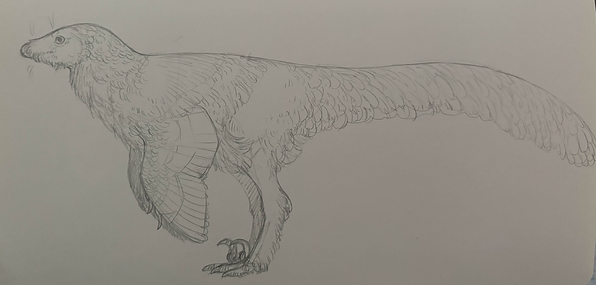
The snow raptor is the largest known variation and the only one that clearly surpasses the average horse in height and mass. Adults commonly reach around 175–185 cm at the head when standing upright, their heavy feathering and powerful build making them appear even larger against the tundra’s open horizon.
They inhabit regions of relentless cold—tundra, glacial valleys, and high mountain ranges where prey is scarce and winters are long. Unlike other raptor types, snow raptors form only very small hunting units, usually consisting of a bonded pair or, at most, two adults. Their size demands substantial prey, and they primarily target large northern mammals such as reindeer and even formidable predators of the ice. Hunts are deliberate and strategic rather than swift and overwhelming, conserving energy in an environment where waste can mean death.
Reproduction reflects the harshness of their habitat. Typically, two eggs are laid and tended carefully, increasing the likelihood that at least one hatchling survives the cold. The young remain with their parents longer than most other variants, learning the terrain and hunting discipline required to endure the climate.
Their plumage provides natural camouflage. Feathers range from pure white to white mottled with black. Males tend to display more pronounced black patterning, while females are often almost entirely white, blending seamlessly into snow-covered landscapes.