

Air magic focuses on generating, shaping and directing wind, pressure, and movement through the caster's mana. It governs the unseen forces of the atmosphere—currents, turbulence, and the shifting balance of pressure that allows air to flow and strike with force. As an untangible element, much like fire, air rarely remains still and constantly seeks motion, thus demanding the caster's continuous attention. When left unattended, air has the habit of dispersing or even getting out of control in the form of sudden wind gusts, depending on how much mana has been put into its motion.
Air magic is channelled through calm focus and exact timing—most air mages are always acutely aware of the air currents around them and they knew exactly when to tap into them, disrupt them, or when to let go.
Air the most versatile element, though its dangers are often understimated by novices. Distractions, impatience or hesitation easily results in a spell going awry, making patience and precision core traits of a good air mage.
Air

Summary
Charge
Also known as: Electricity or Controlled Lightning
Affinity: Darkness
Secondary: Fire
Recommended Level: Luminary
Using elecricity in a controlled manner requires incredible focus and very careful maneuvring. When used in a hurry, it quickly devolves into a lightning spell instead. The difference between the lightning spell and the charge spell is the level of control the mage exhibits over the spell's power. To build up electrical charge with a combination of air and fire magic without letting it become too strong and thus dangerous requires the mage to carefully control their mana input into the spell.
Common uses:
-
B
Notable drawbacks:
-
R
Lightning
Also known as: Skyfire
Affinity: Light
Secondary: Fire
Recommended Level: Arcanist
A hybrid air and fire spell that generates and releases a concentrated bolt of lightning. By rapidly building electrical charge through the interaction of fire-aspected energy and air-aspected pressure, the caster creates a sudden discharge that travels toward a chosen target. The resulting strike combines extreme heat, intense light, and a violent burst of electrical force.
The spell requires the caster to compress and destabilise the surrounding air while simultaneously feeding energy into the forming charge. Once the potential difference becomes great enough, the stored energy releases in a single arc of lightning. Because the discharge follows the easiest conductive path, careful targeting and timing are essential.
Lightning manifests almost instantly once released, making it difficult to evade. However, forming the charge requires precise control and a brief buildup period. A disrupted concentration during this stage may cause the energy to dissipate harmlessly—or discharge prematurely.
Environmental conditions strongly influence the spell’s behaviour. Moist air, storms, and conductive surroundings make it easier to form and guide the strike, while dry, still air may reduce its effectiveness.
Common uses: to strike distant targets with concentrated electrical force, disrupt opponents, or channel destructive energy into a precise point.
Notable drawbacks:
-
Requires careful buildup before discharge
-
Highly sensitive to concentration and timing
-
May follow unintended conductive paths
-
Less effective in dry or electrically stable environments
-
Risk of premature discharge if control falters
Phantom Voice
Affinity: Darkness
Recommended Level: Student
The spell allows the caster’s voice to bypass physical barriers by using dark-aspected mana as a temporary conduit. While sound normally travels through air, dense obstructions prevent its natural propagation. By weaving dark mana into the voice, the caster encodes the sound as a psychic-mana signal that moves independently of the air, carrying the tonal and linguistic information across the obstruction. Once the signal reaches open air, it materializes as audible sound, allowing listeners to hear the voice as if it had traveled normally.
Unlike suggestive spells, this technique does not influence emotions, perception, or judgment. Its purpose is strictly to transmit speech or signals where normal sound cannot reach.
This spell is especially useful in emergencies, warning allies, or summoning aid through inaccessible terrain. The caster must still rely on air alignment to allow the voice to propagate naturally once the dark-mana bridge reaches open space.
Limitations:
-
Requires continuous focus; if the caster falters, the signal collapses.
-
Mana cost rises with distance and the density or thickness of obstacles.
-
Extremely dense or magically reinforced barriers may block the signal entirely.
-
The voice can only emerge in open air; it cannot be projected directly into a listener’s mind.
Silence
Affinity: None
Recommended Level: Novice*
The spell suppresses the transmission of sound by preventing air from carrying vibration within a chosen area. Wind, voices, footsteps, and other ordinary noises may continue to occur, but no sound reaches the ears of those within the spell’s range.
The effect is created by stilling or dispersing the pressure waves through which sound travels. Depending on the caster’s control, the spell may be shaped around a single object, an enclosed space, or a wider area. Weak applications merely muffle sound, while stronger ones may produce complete silence.
Because the spell acts upon all sound equally, the caster is affected alongside every other person and creature within the area. Speech becomes impossible, and even the caster’s own movements produce no audible noise. Communication must therefore rely upon gesture, telepathy, or aura talk until the spell is released.
Maintaining complete silence over a large area requires considerable concentration. Uncontrolled casting may cause the effect to spread farther than intended.
Common uses:
-
Blocking distracting noise in order to study, work, or concentrate
-
Reducing sensory overstimulation caused by loud or chaotic environments
-
Creating a quiet environment for rest or sleep
-
Silencing arguments, crying younglings, or other disturbances within a household
-
Preventing private conversations from being overheard
-
Muting noisy tools, workshops, or construction while they are in use
-
Creating silence in libraries, healing rooms, or other places where quiet is desired
Notable drawbacks:
-
The caster is silenced along with everyone else within the affected area
-
Complete silence may feel disorienting or unsettling, especially when maintained for long periods
-
Strong or poorly controlled casting may spread farther than intended
-
Communication becomes difficult without telepathy, aura interaction, or visual signals
-
Sustaining a large area of silence requires steady concentration and increasing amounts of mana
-
Sudden restoration of sound after the spell ends may be jarring or overwhelming
*At novice level, the spell is usually limited to muffling or silencing a small area, such as a single room or object. Larger areas, complete silence, or precise control over the spell’s boundaries require greater experience.
Speed
Affinity: Both/None
Recommended Level: Student
By removing air friction and controlling winds, it is possible to increase ones speed beyond natural means.
Common uses: h
Notable drawbacks:
-
h
-
Light-based spells:
-
h
Darkness-based spells:
-
h
Siren Voice
Affinity: Darkness
Recommended Level: Student
The spell is the art of weaving dark-aspected mana into spoken sound so that the caster’s voice carries compulsive influence. Sound lies within the jurisdiction of air and thus serves as the medium through which this woven mana travels.
When heard, the listener’s resistance weakens, suggestibility rises, and critical judgment dulls. With sufficient exposure, suggestions may take root and commands may be accepted that would otherwise be refused. The spell does not impose instant domination, and commands that directly violate survival instinct or core identity remain difficult to enforce.
To the affected listener, the caster’s voice acquires a heightened allure. It may be perceived as unusually beautiful, soothing, or compelling, regardless of its natural quality. This alteration is not physical but perceptual, arising from the spell’s manipulation of emotional response and attention.
Effectiveness is influenced by several factors:
-
Sustained exposure deepens the influence.
-
Melodic phrasing strengthens stability.
-
Rhythm, repetition, and sustained tone provide a more reliable vessel for dark mana, which is why the practice is traditionally associated with song.
-
-
Emotional receptivity further lowers resistance.
-
Attraction, admiration, trust, or fascination toward the caster make the spell more potent, with romantic or physical attraction producing particularly strong susceptibility.
-
The spell does not create attraction where none exists, and strong aversion or indifference may greatly reduce or nullify its effect.
-
-
Distance, obstructed hearing, or disrupted airflow may destabilize the woven mana before influence is fully established.
Limitations:
-
Requires clear auditory contact
-
Effect weakens with distance, noise, or obstructed airflow
-
Strong-willed or magically shielded targets may resist
-
Influence builds gradually and requires sustained exposure
-
Influence is significantly reduced if the target feels no emotional receptivity toward the caster
Vapour Veil
Also known as: Wraithfog or Mist Shroud
Affinity: Both
Secondary: Water
Recommended Level: Student
Vapour Veil is a concealment spell that manipulates existing fog or mist to obscure the caster's presence. By guiding the surrounding vapour with air magic, the caster can spread it across the desired area and maintain a veil that makes it harder for observers to discern shapes and movements within it. Water magic as a side-element allows the caster to gather and thicken the moisture within the mist.
The spell relies on fog or mist already being present in the environment. Creating a convincing veil in clear conditions would require generating a substantial amount of vapour, which falls beyond the spell's intended application. The veil can be kept stationary or moved with the caster, though maintaining it while moving requires greater control over the surrounding moisture and airflow.
Common uses:
-
Concealing oneself or a small group while moving through foggy terrain.
-
Obscuring movements during an approach or retreat.
-
Creating temporary visual cover in an already misty area.
Notable drawbacks:
-
Requires existing fog or mist to be effective.
-
Strong winds can disperse the veil and make it difficult to maintain.
-
Moving the veil requires greater control than keeping it stationary.
-
Dense mist also restricts the vision of those concealed within it.
-
The spell obscures sight but does not conceal sound, scent, or auras.
Wind Blade
Also known as: Air Slash
Affinity: None
Recommended Level: Student
Wind Blade compresses air into a narrow, fast-moving blade and releases it towards the target. The projectile retains its shape only briefly before dispersing into the surrounding atmosphere. Its cutting power depends on the degree of compression achieved during casting, while its range is limited by the stability of the surrounding air.
Common uses:
-
Striking distant targets
-
Cutting ropes, vines, or cloth
-
Clearing light vegetation
-
Combat against lightly armoured opponents
Notable drawbacks:
-
Limited effective range before dispersing
-
Accuracy is reduced by adverse weather conditions
-
Ineffective against heavily armoured or highly durable targets
-
Cannot be redirected once released
Wings
There are several spells that can create artificial wings for those born without them. All of them are strongly aligned with the air element and fall strictly under either one or the other affinity:
Light-based spells:
-
Astral Wings
Darkness-based spells:
-
Umbral Wings
-
Transformation
Astral Wings
Affinity: Light
Recommended Level: (advanced) Student
A variant of the flight spell that visualises non-existent wings as an addition to controlling the airflow. The base consists entirely of the air-aligned part of the spell, which enables flight, while the affinity-aligned part is a minor addition usually used for orientation purposes and to keep track of which part of the surrounding air is currently being manipulated. Since air is largely invisible, a visualisation can help mages maintain their orientation, especially beginners. Most mages also prefer having visible wings to make flight appear more natural, as hovering without any visible means of remaining airborne can look rather uncanny.
The Astral version of the spell is used by air mages with an affinity for light. The term “astral” stems from Koruna, where it was first recorded as an official spell, as the term astral is often used synonymous with the term light in that area. The wing shape is formed by manipulating or creating a formation made out of light in the space where the wings should be. This can be expressed in many different shapes and forms. Since the visualisation is purely optical and has no physical structure, the wings do not need to be aerodynamic, though most mages prefer a close approximation of real wings.

Common uses:
-
Sustained flight and aerial manoeuvring.
-
Providing a natural-looking visualisation for magical flight.
-
Helping inexperienced mages maintain their orientation while learning to control airflow.
Notable drawbacks:
-
Flight requires continuous control of the surrounding airflow, which can be demanding for inexperienced mages.
-
The visualisation does not provide lift or physical support; flight depends entirely on the air-aligned part of the spell.
-
Maintaining flight for extended periods can exhaust the caster's mana reserves and cause mana sickness.
Dark Counterpart: Umbral Wings
Umbral Wings
Affinity: Darkness
Recommended Level: (advanced) Student
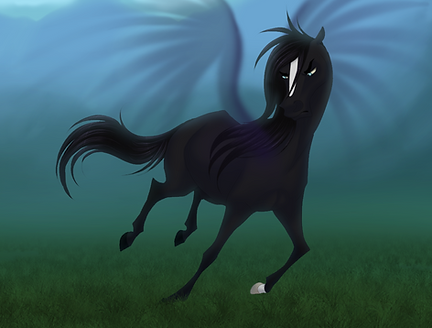
A variant of the flight spell that visualises non-existent wings as an addition to controlling the airflow. The base consists entirely of the air-aligned part of the spell, which enables flight, while the affinity-aligned part is a minor addition usually used for orientation purposes and to keep track of which part of the surrounding air is currently being manipulated. Since air is largely invisible, a visualisation can help mages maintain their orientation, especially beginners. Most mages also prefer having visible wings to make flight appear more natural, as hovering without any visible means of remaining airborne can look rather uncanny.
The Umbral version of the spell is used by air mages with an affinity for darkness. The wing shape is formed by manipulating shadows or creating a void-like formation by banishing light from the space where the wings should be. This can be expressed in many different shapes and forms. Since the visualisation is purely optical and has no physical structure, the wings do not need to be aerodynamic, though most mages prefer a close approximation of real wings.
Common uses:
-
Sustained flight and aerial manoeuvring.
-
Providing a natural-looking visualisation for magical flight.
-
Helping inexperienced mages maintain their orientation while learning to control airflow.
Notable drawbacks:
-
Flight requires continuous control of the surrounding airflow, which can be demanding for inexperienced mages.
-
The visualisation does not provide lift or physical support; flight depends entirely on the air-aligned part of the spell.
-
Maintaining flight for extended periods can exhaust the caster's mana reserves and cause mana sickness.
Light Counterpart: Astral Wings
Transformation
Affinity: Dakness
Recommended Level: Arcanist (advanced)
Transforming one's body to grow functional wings is one of the more difficult applications of Transformation. The wings must be properly integrated into the body's structure, with sufficient muscle strength, suitable attachment points and the necessary coordination to support flight. Simply creating wings that look correct is not enough; the body must be capable of moving and controlling them.
The body's mana naturally resists the foreign shape imposed upon it and will gradually reverse the transformation whenever the caster fails to maintain sufficient focus on the spell. This makes prolonged flight difficult, as the caster must devote considerable attention to keeping the wings in place while also controlling their movement.
With extensive practice, a caster can learn to lock the transformation in place, preventing the body's mana from automatically undoing it. This requires the body to become sufficiently accustomed to its altered form, and mastering the technique takes considerable time and effort.
Common use: Enabling flight for those who cannot fly naturally.
Notable drawbacks:
-
Functional wings require extensive knowledge of their anatomy, musculature and movement.
-
The body must develop sufficient coordination to control the wings effectively.
-
The body's mana actively resists the transformation, requiring constant focus until the form can be locked in place.
-
Locking the transformation requires extensive practice and gradual adaptation to the altered body.
-
Maintaining the transformation can cause severe mana depletion and mana sickness.