
Kindred
Kindred are broad classifications describing the different forms taken by sentient life in Mereldia. All modern kindred ultimately trace their origins to the fae, though their histories and degrees of fae influence differ greatly. Kindred are distinguished by inherited traits, physical form and magical potential.
A person's ancestry may contain elements associated with several kindreds, particularly among ancient lineages, but their kindred is determined by the traits and nature they inherit rather than by the identity of every ancestor. What remains the core indicator for kindreds is their magical potential.
Note: When animals are mentioned, then that refers to the witless (wild animals, livestock, pets, etc.) and not to any person belonging to a kindred!
For an overview of all possible design features and how commonly they occur in which kindred, please consult this spreadsheet.
Author's Notes
-
Kindred is not a social identity that a character can choose. It is a classification of their inherited or intrinsic nature, even if they may conceal it or identify socially with another kindred.
-
Official kindred verification (for paperwork) is judged on three main criteria:
-
mana strength
-
appearance (not a reliable indicator)
-
behavioural traits (inherent instincts)
-
-
If your character lives in a city, their kindred will have to be verified for their official paperwork. This is something that gets tested and cannot easily be faked. A character from a different kindred therefore cannot simply claim to be rootkin, for example, on official paperwork. They can, however, pretend to be rootkin in situations where official verification is not required, provided they are capable of suppressing their mana enough to appear as one.
Lineages
Humans (extinct)
Tuatha Dé Danann
Aos Sidhe (Gods)
Lesser Fae
Fae Lineages
experimentation using magic
magically enhanced bodies
composite mortal bodies
Interbreeding with Animals
descended
created
Demon Lineages
Chimera Lineages
Rootkin Lineages
Rootkin
The most common kindred. Rootkin are people whose sentience and magical nature ultimately descend from fae ancestry. Their magical origin lies far back in history, diluted through countless generations until fae influence became a natural part of their lineage. Their forms consequently developed naturally within the environments in which their lineages evolved.
While all rootkin possess magic, it is subdued compared to that of their distant fae ancestors. Their eyes can take on almost any colour, but the rest of their appearance generally remains within colours occurring naturally in their species.
Appearance
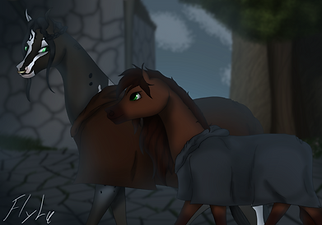
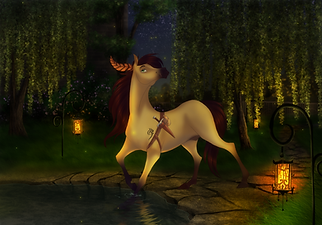
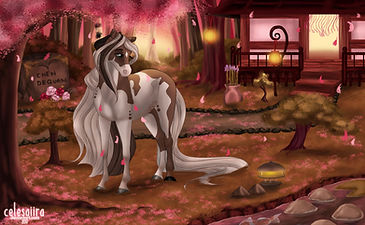
Since rootkin are the sentient lineage with the most animal ancestry, their colours usually remain within tones considered natural to their species. They do not sport additional physical features that are foreign to their species (i.e. a horse won't grow scales or feathers), but they can have colour variations that would not occur within their animal counterparts. For example, while a horse's skin is typically dark or pink, a rootkin horse may have brown or white skin. Their eye colours are the most telling indicator of their fae heritage, as they can be anything rather than being limited to the two or three colours commonly found in their species.
When it comes to markings, the colours keep themselves in natural tones as well, though the shapes can sometimes be something that wouldn't be observed in animals of the same species.
Unnatural colours are rare and are indicative of a more recent fae heritage and thus a stronger mana field. Those whose fae lineage is distant enough that they no longer count as faekin, but whose physical characteristics still retain signs of their fae ancestry, are likewise classified as rootkin as long as their ancestry can be verified.
Magic
As the kindred with the most distant fae ancestry, rootkin have the weakest mana fields of the four kindreds. Their sentience and ability to use magic at all are evidence of their fae origins, but that ancestry is ancient enough that their magical potential has become greatly diluted over the millennia.
Presence
Rootkin are found almost anywhere. They are the biggest kindred in numbers and make up the large majority of the populations in cities and villages. Due to their weaker mana, they commonly do not fare well in regions where individuals of kindreds with significantly stronger mana, such as demonkin and faekin, pose a greater threat. Due to that, villages and cities were constructed as safe havens and allowed their inhabitants to overpower hostile individuals by sheer numbers when necessary. This foundational purpose has unfortunately given rise to unfounded fear and discrimination against demonkin and faekin in some regions, ignoring the fact that it was allied demons and fae who helped lay the first stones of their cities in the first place.
Outside of settlements, rootkin live in what is commonly referred to as the wild lands. There, they usually live in traditional social groups such as herds, packs, and flocks, and face the dangers that life outside settlements brings with it, including predation and exposure to natural disasters.
Author's Notes
-
If you want your character to be rootkin but to still have an unnaturally coloured marking but without having to invent a whole family tree to justify it, you can simply make it a tattoo.
-
You do not need to create an elaborate family tree to justify minor variations in a rootkin character's appearance. Fae ancestry can become diluted and resurface unpredictably, so unusual but still natural traits do not necessarily need a specific known ancestor.
-
If your character has a demonkin or faekin parent while the other is rootkin, they will themselves count as the stronger kindred and not as rootkin. They will inherit the relevant mana strength and behavioural traits at the very least, regardless of which physical traits they inherit.
-
Rootkin as a kindred is only possible when the ancestry from another kindred no longer influences an individual's mana strength or behaviour.
-
Chimera
This kindred encompasses people descended from ancient creatures whose bodies were deliberately formed by merging multiple creature forms. These creations, produced through manifestations and flesh-based thralls, gave rise to composite forms such as gryphons, pegasi, kirin, raccardi, and similar hybrids.
The original chimeras were created thousands of years ago and are no longer "produced." However, the artificial creatures were capable of reproduction, allowing their composite traits to become hereditary. Over countless generations, these lineages became naturally reproducing populations, and the resulting descendants are what are now classified as chimeras.
Chimeras are defined by their composite physical nature rather than their magical capacity. Their forms may contain features from several distinct creatures, while established chimeric lineages can reproduce those traits consistently without magical intervention. In addition to features unnatural to rootkin, they can also sport splashes of unnatural colours, though these are usually singular accents rather than a fully unnatural appearance.


Appearance
Chimeras are characterised by physical features inherited from multiple creature forms. Their bodies may combine traits that would not naturally occur together, such as wings, horns, talons, antlers, scales, or other features belonging to different species. These traits are hereditary within established chimeric lineages and can be passed on without magical intervention.
Their coloration is likewise less restricted than that of rootkin. While most of their body generally retains natural colours, chimeras may display isolated patches, markings, or other accents in colours that would be considered unnatural in rootkin. The extent of these traits varies considerably between lineages and individuals.
Magic
Chimeras generally possess stronger mana fields than rootkin, though their magical strength remains substantially below that of demonkin and especially faekin. Their mana strength varies more widely between individuals and lineages than that of any other kindred, but even the strongest chimeras generally fall well below the levels associated with demonkin.
This variation makes mana strength the primary indicator when determining whether someone is a chimera, particularly when their appearance could also be explained by demonkin or faekin ancestry. While an individual's exact mana strength can vary considerably, an aura that is stronger than that of a typical rootkin but substantially weaker than that expected of a demonkin is a strong indication of chimera lineage.
Presence
Chimeras largely inhabit the same places rootkin do, since the main differences between the two kindreds lie more in appearance than in mana strength or behaviour. However, certain chimeric lineages have developed distinctive cultures or hold special social standing compared to others.
Pegasi
Winged horses are among the most varied chimeric lineages in their physical characteristics, including differences in wing shape, the amount of feathers on the body besides the wings, and whether they have a horse's tail or a bird's tail. They hold an especially high standing in Koruna, where horses are revered above other species and pegasi are the equines who can physically come closest to the divine sky. They are consequently regarded more highly than most other chimeras and commonly hold elevated social positions.
Raccardi
This chimeric lineage became a slave race during the founding of Koruna. The tradition subsequently spread to Eriwon, the Coastal Pond, and the countries bordering Koruna and Eriwon to the north. As a result, raccardis cannot gain independence in these countries and are inherently regarded as slaves.
Gryphons
Gryphons are said to be the oldest chimeric lineage in existence, dating back to the times of the first folk. They live in the mountainous regions of northern Mereldia and have their own kingdoms. Their king's land, Sraderham, borders the city of Nordberg and has partly been assimilated into the city itself.
Gryphons are a proud and stubborn people who often look down on others. Their magic, however, is among the weakest of any sentient creature in Mereldia, with some gryphons possessing even weaker auras than ordinary rootkin. Due to their dexterity with their claws, they are less reliant on magic than many other people in everyday life and consequently tend to regard magic users with disdain or view them as lazy.
Geographic Distribution
-
Pegasi are found everywhere.
-
Kirins are most often found in and around Eriwon.
-
Gryphons are concentrated in the north and only rarely have reason to venture south.
-
Hippocampi and similar water-based chimeras can be found within the Coastal Pond, as well as in the sea south of Koruna and Eriwon. The waters around the North Lands are extremely cold, and are therefore home to species adapted to the colder climate.
Author's Notes
-
Chimeras can have unnatural colouration, but this does not necessarily indicate recent fae ancestry in the way it can for rootkin.
-
Chimeras are born with their composite nature and do not possess enough mana to shapeshift their form.
-
Slavery is outlawed in the North Lands, allowing raccardis to live independently there. Everywhere else, they are at risk of being captured and forced into the slave trade.
- Chimeric lineages can interbreed with other chimeric lineages that are close enough in species, producing offspring with combinations of their parents' traits.
- Chimeras can interbreed with rootkin, though the proportion of composite traits inherited by the offspring depends heavily on genetics. An offspring can even appear almost perfectly rootkin. Since the two kindreds are nearly identical in mana strength and behaviour, the offspring's kindred is determined by their appearance alone. Even a single small patch of feathers on an otherwise rootkin-looking horse would make them a chimera on official records.
- Mixed-lineage chimeras can inherit unusual combinations of traits that are not normally seen within either parent lineage.
- A chimera's inherited traits can skip generations.
Demonkin
During the Great War, the warring gods created creatures from magically modified bodies to aid them in battle. Using magic, they altered existing life forms to withstand and channel far greater amounts of magic than naturally occurring creatures could. These included manifestations as well as flesh-based thralls created as living servants.
Neither were demons themselves, but both were capable of producing offspring. Some of these offsprings were also produced through breeding between the creations and fae, further combining their magical potential with fae ancestry. Their descendants inherited traits resulting from these modifications, including an increased capacity for magic. These original offspring as well as their descendants are now known as demons.
Demonkin are therefore defined primarily by their heightened magical potential and descent from these magically enhanced lineages. This heritage may manifest physically, magically, or behaviourally. While widely varied in appearance, demonkin commonly exhibit unnatural colours and features, including the characteristic swirl-shaped markings known as demon marks. Such features are not reliable identifiers, however, as some demonkin may resemble rootkin or chimeras closely.

Appearance


Demonkin have no single defining appearance, though certain features occur frequently among them. These include horns, split hooves, double tails, and other chimeric elements; unnatural colours; and unusual eye characteristics such as slit pupils in species that would not naturally possess them. The characteristic swirl-shaped demon marks are especially common among demonkin from Eriwon. They originated with a lineage of demons created by one of the warring gods in the region, whose distinctive appearance was subsequently imitated by other gods when creating their own demons.
None of these features are exclusive to demonkin. Fae can possess the same physical characteristics, and some demonkin may instead resemble rootkin or chimeras closely.
Magic
Demonkin possess substantially greater mana capacity than rootkin and chimeras, a remnant of the modifications made to their ancient ancestors. Their mana strength varies considerably between individuals and lineages and is generally below that of fae, though the difference can be small enough that mana strength alone is not always a reliable indicator of demon heritage.
Unlike fae, not all demonkin can replenish their mana as naturally. Those with particularly high mana consumption can therefore struggle to sustain themselves without obtaining additional sustenance through other means. This is the origin of the strong hunting drive common among demonkin.
Presence
Demonkin are most common in the wild lands, where their hunting drive poses fewer difficulties than it does within cities. Their need to hunt regularly can make settled life impractical, particularly for those with a strong hunting drive.
Demonkin who live in cities are most commonly found in Koruna, Caelmere, and the Coastal Pond. Eriwon is considerably more dangerous for them due to the widespread belief that demonkin are a pest and a slave race. They are hunted and enslaved there, leaving only a small number willing to risk living openly within the country.
Although demonkin do exist in the North Lands, they are far less common there. This is generally believed to be due to the high concentration of fae in the region, which makes the North Lands less suitable for demonkin settlement.
Author's Notes
-
Pure demons are naturally immortal.
-
Half-demons can be immortal or simply very long-lived.
-
Signs of demon heritage are highly persistent and may still manifest many generations down the line.
-
Some demons, especially those with composit nature, are able to shapeshift.
-
For example, they may have a water form and a land form that they can shift between.
-
-
The urgency of the hunting drive depends on the strength of an individual's mana. The stronger their aura, the more persistent the urge to kill something.
-
It is recommended to go hunting at least once or twice a week to properly manage the urge.
-
Ignoring the urge to hunt for more than a week can result in gradual psychological deterioration, eventually causing the individual to attack others without sense or reason.
-
Faekin
Faekin include the fae themselves and beings whose nature remains directly shaped by fae influence. Unlike rootkin, whose distant fae ancestry has become deeply integrated into ordinary biological forms, faekin retain characteristics governed by fae principles. These may affect their bodies, magic, behaviour, or other aspects of their nature.
Fae ancestry is not required to be faekin. The classification instead depends on whether fae influence remains fundamental to the individual's nature.
Caspanas are classified as faekin despite lacking fae descent, as their nature and physiology align inherently with fey principles.


Appearance
Faekin have no single defining appearance. Their physical forms can vary greatly depending on the nature of the feyness shaping them, and may include unnatural colours, unusual markings, chimeric features, altered proportions, or other characteristics that would not occur naturally in their species. Some faekin may instead appear almost indistinguishable from rootkin.
Unlike demonkin and chimeras, however, their unusual features do not necessarily follow a hereditary lineage. They are manifestations of the individual's nature and can therefore vary considerably even between members of the same kindred. Appearance alone is consequently not a reliable means of identifying a faekin.
Magic
Faekin possess the strongest auras of all kindreds. Unlike other kindreds, whose magical abilities are the result of diluted ancestry or deliberate modifications, fae are naturally meant to possess and use magic. They therefore suffer none of the limitations that can arise in other kindreds, such as weak mana strength or the hunting drives experienced by some demonkin.
Fae are also closely connected to nature and can perceive the presence of ley lines. However, this connection does not allow them to access or directly draw upon the ley lines themselves.
Presence
Faekin are most commonly found in the north of Mereldia, particularly around the ancient forest of Jengu and the remnants of the World Tree. Most fae are naturally drawn towards the immense magic still lingering there and have made the forest their home. Despite this, Jengu is a highly dangerous place to live even for fae, as their behaviour tends to become more wild there.
The north is also home to the Heranor family, whose presence has attracted further fae to the region as they gather around the family and its cause.
Koruna has been hostile towards fae since the Summer Solstice of 808 A.W. Fae are regarded with high suspicion and may be arrested without proper cause. Caspanas are particularly persecuted, being highly illegal and subject to execution upon discovery.
Outside of Koruna, most regions are considerably more welcoming towards fae. They may even take positions among the highest levels of society, though their vastly superior magical abilities often cause them to be regarded with extreme caution.
Author's Notes
-
Pure fae are naturally immortal.
-
An offspring of a rootkin or chimera individual and a fae would also be classified as faekin.
-
The magical inheritance is strong enough for the faekin classification to persist for up to seven generations without any new fae blood being introduced.
-
-
Those with partial fae blood who still qualify as faekin may have bodies that are poorly suited to containing the amount of magic they possess. This can cause the hunting drive also characteristic of some demonkin to emerge.
-
The urgency of the hunting drive depends on both magical strength and the body's compatibility with that magic. It usually begins to emerge in the second or third generation, meaning half-fae usually show no signs of a hunting drive.
-
The hunting drive can therefore occur in faekin despite their fae ancestry, as their bodies may not have inherited enough of the physical traits that allow pure fae to safely sustain their magical strength.
-
-
Caspanas have a hunting drive because their bodies are inherently mortal and therefore not suited to drawing in as much mana as their increased magical strength requires.
-
It is recommended to go hunting at least every two to three days to properly manage the urge.
-
Ignoring the urge to hunt for more than a week can result in gradual psychological deterioration, eventually causing the individual to attack others without sense or reason.
-
-
Caspanas are unique among the faekin in that they do not have a single drop of fae blood in their lineage, yet exhibit all the magical and behavioural traits characteristic of faekin.